
15 Strangest Things Used as Money in History
Discover 15 strange things people used as money in history, from giant stone discs and cocoa beans to salt and animal teeth. A fun educational article for kids.
WORLD FACT FOR KIDSWORLD HISTORYCURIOUS FACTS
6/11/20262 min read
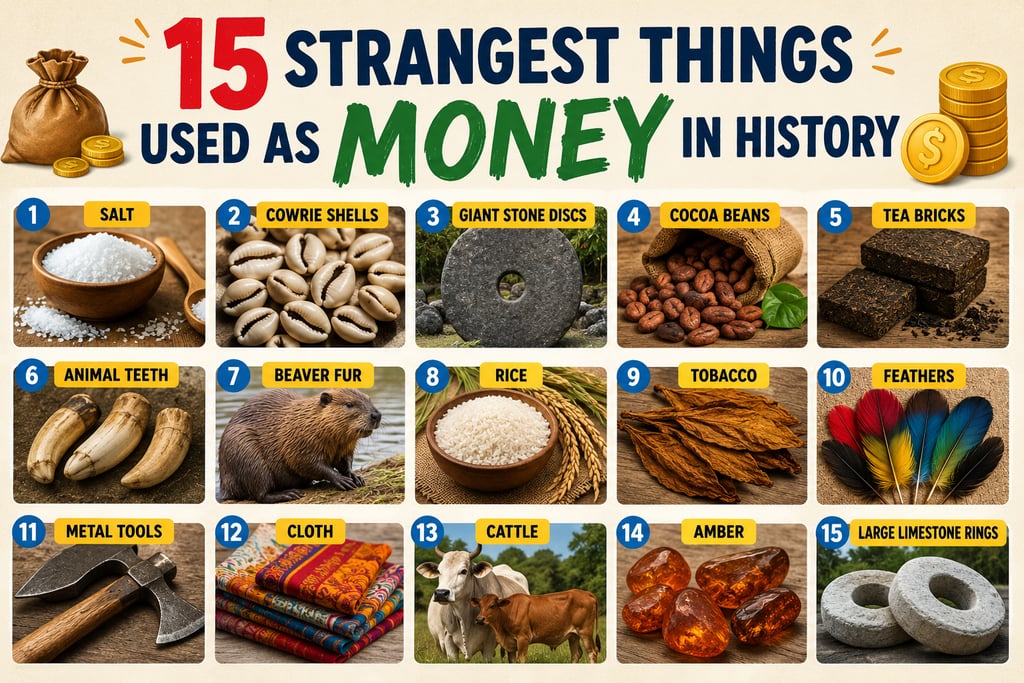
Have you ever imagined buying a toy with a giant stone or paying for food with salt? Before coins, paper money, and digital payments existed, people around the world used many unusual items as money. These objects were valuable, easy to trade, and accepted by communities.
Let's explore 15 of the strangest things people used as money throughout history!
1. Salt
Salt was once so valuable that it was used as money in many ancient civilizations. People needed salt to preserve food and stay healthy. In some places, workers and soldiers were even paid with salt.
2. Cowrie Shells
Cowrie shells were one of the world's oldest forms of money. They were used in Africa, Asia, and parts of Europe for thousands of years because they were durable and easy to carry.
3. Giant Stone Discs
On the Pacific island of Yap, people used huge stone discs called Rai stones as money. Some were so large that they could not be moved, but ownership still changed from person to person.
4. Cocoa Beans
The ancient Maya and Aztec civilizations used cocoa beans as money. These beans were valuable because they could also be used to make chocolate drinks.
5. Tea Bricks
In parts of China, Tibet, and Mongolia, compressed blocks of tea were used as currency. People could trade them or even break off pieces to make tea.
6. Animal Teeth
In several island communities, animal teeth were considered valuable and were used in trade. Whale teeth were especially prized in some cultures.
7. Beaver Fur
In North America, beaver fur was once used like money. Traders exchanged fur for tools, food, and other goods.
8. Rice
Rice served as a form of currency in parts of Asia for centuries. Since it was an important food source, it had real value in everyday life.
9. Tobacco
In colonial America, tobacco was often used instead of coins. Farmers could pay taxes and buy goods using tobacco leaves.
10. Feathers
Certain colorful bird feathers were considered highly valuable in some Pacific Island societies and were traded like money.
11. Metal Tools
Before coins became common, tools such as knives, axes, and spades were often exchanged as currency because they were useful and valuable.
12. Cloth
In several African regions, specially woven cloth was used as money. The quality and size of the cloth determined its value.
13. Cattle
Cows, goats, and other livestock were important forms of wealth in many ancient societies. People often measured wealth by the number of animals they owned.
14. Amber
Amber, a fossilized tree resin, was highly valued in Europe. It was traded over long distances and sometimes used as a form of currency.
15. Large Limestone Rings
Some communities used carved limestone rings as valuable trade items. These unusual objects symbolized wealth and status.
Why Did People Use These Things as Money?
Money does not always have to be coins or paper. Throughout history, people chose items that were:
Valuable
Difficult to find
Easy to recognize
Accepted by the community
As societies grew, coins and paper money became more practical. Today, many people even use digital money that cannot be touched at all!
Fun Fact
The word "salary" is believed to have originated from the Latin word "salarium," which is linked to salt. This shows just how valuable salt was in ancient times.
Conclusion
History is full of surprising inventions, and money is no exception. From giant stones and cocoa beans to feathers and salt, people have used many strange objects as currency. These unusual forms of money remind us that anything can become valuable if enough people agree it has worth.
Quick Quiz
Which food item was once used as money by the Aztecs?
What giant stone currency was used on Yap Island?
Which common seasoning was once valuable enough to pay workers?
Answers:
Cocoa Beans
Rai Stones
Salt